Showing posts with label FGM. Show all posts

Monday, January 23, 2017

KENYA: Knife-rapists go door-to-door

Citizen Digital
December 15, 2016

Circumcisers in Kuria embark on door-to-door forceful circumcision

by George Juma For Citizen Digital

Police in Kuria East Sub County have vowed to take punitive measures against elders and circumcisers in the region who have embarked on a door-to-door forceful traditional cut for both males and females. ["Forceful circumcision" is a double euphemism. It would be better called "rape by knife".]
 
The circumcisers and the elders, also known as Wazee wa Kimila, reportedly move door-to-door fishing out the girls and boys who are yet to face the cut and ferrying them forcefully for circumcision at established places.

Speaking to Citizen Digital, Kuria East Sub County Deputy County Commissioner Mr Westly Koech said that so far they have arrested several people linked to the outlawed exercise during their ongoing anti-FGM operations in the region.

On Monday, Mr Koech said they arrested three suspects who were found moving door-to-door harassing the family of the uncircumcised individuals and have put them behind bars.

He said the group of circumcisers and the elders are crisscrossing the sub county on a motorbike looking for uncircumcised people and forcing them to undergo the cut.

The DCC said old men who had been circumcised at health facilities are also being forced to undergo the traditional cut, adding that police on Monday rescued an old man who was being ferried on a motorcycle for circumcision.

Mr Koech has issued a stern warning to the circumcisers and any other person linked to FGM in Kuria or forceful circumcision for men in the region saying that they are not going to spare them in the ongoing crackdown in the region.

He further faulted the victims of such harassment saying that most of them are not willing to come to the station to record statements to enable police to take action. He, however, assured that they are pursuing the suspects.

JAKARTA: Why female genital cutting is so common in Indonesia

Rappler
December 5, 2016

Why the cutting of a woman's clitoris is so prevalent in Indonesia

Female genital mutilations is a widespread practice in the 4th most populous nation in the world. Here's why.
by Ayunda Nurvitasari

The perception that females must be circumcised like males, as well as religious belief, social pressure, and encouragement from health workers are behind the rampant practice of female genital mutilation (FGM) in Indonesia, a new research reveals. ["like males" takes male cutting for granted, but many of the same arguments deployed here can equally well be used against it.]
 
Conducted by Hivos Southeast Asia, an organization that focuses on global development, and the Center for Gender and Sexuality Study at the University of Indonesia, the research found that among mothers who have had FGM procedure done to their daughters, 97.1% believe circumcision is a must for both male and female. About the same percentage of the respondents also said that they believe the practice has a strong religious justification, and that they did it because it is considered a cultural tradition practiced by most of the people they know.

The study, which was unveiled last week, found that up to 61% of girls underwent female genital mutilation (FGM) before they turned one year old. It also identified a predominant perception that uncircumcised girls will be alienated because they are considered filthy and will grow up promiscuous and unwanted.

The report was based on in-depth interviews, literary reviews, focus group discussions and surveys conducted in Medan, North Sumatera; Sumenep, East Java; Ketapang, West Kalimantan; Bima, West Nusa Tenggara; Polewali Mandar, West Sulawesi; Gorontalo; and Ambon, Maluku. Held in January 2015 to April 2015, the study involves 700 respondents, half of whom are mothers who had the FGM procedure done to their daughters. The remaining half did not opt for the procedure.

Insufficient knowledge
The WHO (World Health Organization) determines female genital mutilation (known as “sunat perempuan” in Indonesia) as a very dangerous practice because it can cause severe bleeding, urinating problems, infections and many other complications, while giving no health benefits at all. The practice is considered a violation of human’s rights to girls and women.

However, the study recorded that up to 90% of Indonesian mothers believe that FGM will make their daughters healthier. A total of 84.6% also believe female genital mutilation can make their daughters’ vagina cleaner, 55.4% believe it will enhance their daughters’ fertility, and 54.6% believe it will control their daughters’ sexual drive.

In addition to false assumptions regarding the health impacts of FGM, the respondents practice FGM due to religious beliefs and social pressure. Up to 88% of the respondents believe that not circumcising their daughters would make them sinners, and as much as 36% believe that FGM will make it easier for their daughters to find a husband.

Based on their educational backgrounds, the highest number of mothers who circumcised their daughters are high school graduates at 32.3%, followed by elementary school graduates at 26.6%, and junior high school graduates at 23.7%. At least 9.4% of mothers who practice FGM have a bachelor’s degree.

Dangerous procedure
Half of the mothers who have their daughters circumcised believe the procedure involves injuring the tip of the clitoris. About 36.6% sees it as cutting a small part of clitoris, 9.1% believes it involves wiping the clitoris with antiseptic, and 1.1% sees FGM as the piercing or scraping of vagina.

The WHO categorizes FGM into 4 types, two of which are commonly practiced in Indonesia.

One of the common practice in Indonesia is clitoridectomy, which is the partial or total removal of the clitoris or the fold skin surrounding the clitoris (the prepuce). In Indonesia, this can be found in Bima, West Nusa Tenggara, where the procedure involves cutting the tip of the clitoris that they called “isi noi.” In other areas in the country, such as Ambon, the same procedure entails a partial removal in the size of “biji padi” (a grain of rice).

The most common form of FGM in Indonesia, which was found in 6 out of 7 areas surveyed, is what the WHO categorizes as type 4. It involves injuring the vagina until it bleeds a little, scraping the clitoris until it shows blood on the surface, or pinching the clit with small knife to extract the white “haram” part – a practice called “cubit kodo”.

Other than these two, female circumcision in Indonesia is merely a “symbolic” practice that does not involve cutting the vagina – practices like wiping the clitoris with cotton and dab the cotton with antiseptic to symbolize blood, a practice that is common in West Kalimantan and East Java. In Gorontalo the procedure involves touching the clitoris with a small knife; in some areas, there is even no touching of the genital involved.

More than half of the FGM procedures is conducted by dukun bayi (baby shaman) and a quarter is done by dukun sunat (circumcision shaman), while 17 percent of midwives and 0.9 percent of doctors conducted the procedure, the study shows.

The danger lies in the fact that the tools used for the procedures are not always hygienic.

Knives, razors
Dr. Johanna Debora Imelda, a member of the research team at the Center for Gender and Sexuality Study UI, listed some of the tools used in the procedures, from small knives, razor blades to eyebrow scissors.

“The small knife being used is usually considered sacred, so it is not washed for years, often ending up rusty,” she said during the launch of the report.

In the report a girl from Bima testified about her experience: “I was 6 years old and I felt so afraid that I cried. I didn’t have the courage to look at it. It bled for two days, so I was treated with traditional medicine. Then I was told to bathe in the sea. After the circumcision it felt painful when I peed.”

She recalled her friends’ experiences: “One of my friends was too afraid that she moved a lot during the process. She bled a lot like a woman in childbirth. Another one was so afraid to have it done after hearing of others’ experiences, so her parents persuaded her by buying her gifts so she would agree to the procedure,” the girl explained.

Social and cultural
Johanna says the practice of FGM is deeply embedded in Indonesian culture, although female circumcision is not mentioned in the Quran. The study found that society sees the practice as sacred and that it is the parents’ responsibility to have their daughters circumcised.

Support and pressure from family, neighbors, religious figures and health practitioners contribute to a mother’s decision to circumcise their daughters.

Often women’s values lay on whether or not she is circumcised. There will be social sanctions to anyone who goes against the practice. The report describes how different societies practice this.

In Poliwali Mandar and Sumenep, for instance, women who are not circumcised are labeled promiscuous and believed to have high sexual drive. They also believe that women who are not circumcised run the risk of turning into sex workers. In Ambon, uncircumcised women are not allowed to enter the mosque, pray or read the Quran. In Bima no man would want to marry an uncircumcised woman.

Riri Khariroh, a commissioner at the National Commission on Violence against Women (Komnas Perempuan), said during the report launch that eliminating the practice of FGM in Indonesia will require redefining the term to shed its association with religion. [They want to "eliminate the practice" even though some versions do not involve touching the genitals....]
 
“We should change the term ‘sunat perempuan’ (female circumcision) because ‘sunat’ has a strong association and attachment to religiosity and is therefore difficult to eliminate. We should start using the term ‘pelukaan genitalia perempuan’ (female genital mutilation) instead,” she said. – Rappler.com

GEORGIA: Government may make [female?] genital cutting criminal

This is Georgia the country next to Turkey, and it's not a done deal yet


Agenda.ge
November 24, 2016

Gov’t takes step to declare circumcision a criminal offence

Georgia's Ministry of Justice has begun proceedings to make circumcision, same as female genital mutilation (FGM) illegal in Georgia. [A careful reading suggests that "same as" means "such as" not "like" and that this whole article refers only to female genital cutting.]
 
Acting Minister of Justice Thea Tsulukiani said the Justice Ministry had initiated a law amendment that would make circumcision a criminal offence.

Her comment yesterday followed local media reports that two-three of villages in eastern Kakheti region, inhabited by Muslim Kist people, still addressed FGM.

Several locals told media that circumcision remained part of their tradition that played a role in the 'coming of age' of a girl and was necessary before marriage.

Throughout the world FGM is widely frowned upon, with the World Health Organisation (WHO) saying FGM is the deliberate mutilation of female genitalia, with FGM being described as any procedure that injured the female genital organs for non-medical reasons.

The Muslim Kist population still believed FGM was appropriate and meant girls would be a virgin for their wedding night and remain faithful to her husband, as the mutilation prevents women from achieving sexual pleasure.

The process was generally carried out by people who do not have relevant medical knowledge and experience, with no anesthesia and sometimes could be fatal.
"Over the last four years the Government of Georgia has taken a range of steps ... to ensure high level protection of children’s rights,” Tsulukiani said. "The process must continue and conclude with the ratification of the Istanbul Convention I had the honour of signing two years ago. I have big hopes that the new Parliament of Georgia will ratify the Convention,” she added.
A couple of days ago the Ministry of Justice introduced an Article in the Istanbul Convention that envisaged circumcision would become illegal and punishable, said Tsulukiani, adding "unfortunately” there was no earlier information about the existence of the archaic tradition in the "two or three” villages in east Georgia where the practice still occurred.

Representatives of the Muslim religion said their holy scriptures "said nothing" about circumcision and said it was a custom of some ethnic groups that mainly resided in Africa, consequently Islam generally doesn't support FGM.

Georgia’s civil sector has already addressed the issue and said circumcision was one of the "highest level violation of human rights.”

Circumcision is generally carried out on young children aged 2-4 years of age but it can also be carrier out on young adults through the initiative of family members.

LONDON: 2 doctors face FGC charges over consented "designer vagina" ops

the Evening Standard
November 22, 2016

Doctors face prosecution over genital cosmetic surgery in London clinics

by Martin Bentham
Two London doctors face prosection over 'designer vagina' procedure.

Two London doctors are facing prosecution for allegedly carrying out illegal cosmetic surgery on women at clinics in the capital.

The women who had the “designer vagina” procedures were adults who paid for the surgery in the belief that it would make them more attractive.

But Scotland Yard detectives are now carrying out a criminal investigation after being alerted to the cases and deciding that the doctors’ actions involved a potential breach of legislation outlawing female genital mutilation.

Files on both doctors have now been submitted to the Crown Prosecution Service for charging decisions. A file has also been sent to prosecutors on a third case in Cheshire.

The news will raise hopes that a first conviction under anti-FGM legislation could be secured after the failure last year of the only prosecution so far.

The police investigations will also prompt renewed debate about cosmetic genital surgery, which includes labia reduction and vaginal tightening.

It comes after the pop star Sinitta revealed plans to have her own “vaginoplasty” filmed and broadcast online.

The singer, 53, has already put footage of a friend having a “designer vagina” operation on the Periscope site.

Such procedures — which critics say are wrongly promoted as enhancing sexual pleasure and attractiveness — are carried out widely at clinics in Harley Street and elsewhere.

The Home Office warned two years ago, however, in evidence to Parliament, that the operations may be illegal unless there was a medical or psychological reason for them.

That prompted renewed attention on the issue from police and prosecutors, resulting in the criminal investigation into the two London doctors.

It is understood that in both cases prosecutors believe the evidential test which they apply before bringing charges has been met.

Prosecutors are assessing whether bringing charges is in the public interest. Sources say that since the application of law to “designer vagina” surgery has not been tested in court, government departments are being consulted.

The views of royal medical colleges and anti-FGM campaign groups will also be considered as prosecutors prepare guidance to determine their approach. This is expected to be completed by the end of the year. Decisions over bringing charges will follow.

“So-called designer vagina surgery is classed as FGM when it comes to rules on mandatory reporting,” said a source. “The question [here] is whether it is in the public interest to prosecute.”

There are no official figures on the number of cosmetic genital operations carried out, since many are conducted privately, but doctors believe the surgery is becoming more common.

A study by the Royal College of Obstetricians and Gynaecologists has blamed the trend on “marketing by the private sector” and images online.

Doctors warn that women are being pressured by “unrealistic representations of vulval appearance in popular culture” and the advertising of the surgery as an “unproblematic lifestyle choice”.

A report by the British Society for Paediatric and Adolescent Gynaecology on labia reduction has warned that there is “no scientific evidence” to support the practice and that the health risks, particularly to girls under 18, include infection and a loss of sensitivity.

There are similar concerns about surgery designed to increase the size of the “g-spot” and tighten the vagina.

Campaign groups against FGM have complained that a “double standard” is applied under which ethnic minority communities, which have traditionally practised mutilation, are being targeted by law enforcers while identical surgery carried out on white women for cosmetic reasons is tolerated.

The Commons Home Affairs Committee raised the same concern in a 2014 report and asked Theresa May, then the home secretary, to consider whether legislation was needed to close this potential “loophole”. Mrs May replied that the 2003 Female Genital Mutilation Act covered cosmetic surgery.

In a submission to Parliament, she added: “The 2003 Act does not contain any exemption for cosmetic surgery. If a procedure ... is unnecessary for physical or mental health ... then it is an offence  [making MGC an offence]... it would be for a court to decide if cosmetic surgery constitutes mutilation and is therefore illegal.”

The Crown Prosecution Service confirmed that it was assessing three files on suspected FGM offences, but declined to comment further.

The Met also declined to comment.
[No mention of the elephant in the room, informed consent.]

Sunday, September 25, 2016

UNITED NATIONS: Genital cutting called "child abuse" - but only of girls

All good, but why specify "female"?


BBC News
July 15, 2016

FGM is child abuse, says UN Population Fund chief

The head of the United Nations Population Fund has, for the first time, described female genital mutilation as "child abuse".

Dr Babatunde Osotimehin told the BBC that the custom was a human rights abuse and needed to end immediately.

More than 200 million women and girls around the world have undergone the procedure, where parts of the female genitals are removed.

The UN estimates a further three million are at risk of being mutilated.

Dr Osotimehin said: "There is absolutely no reason to cut anybody, and it seemed to us that it is part of the gender imbalance that has always existed in these communities which are based on patriarchy. I think it's child abuse."

The organisation had previously referred to the practice as a human rights violation, but has stopped short of calling it child abuse.

FGM is practiced mainly in parts of Africa, the Middle East and Asia.

It involves the partial or total removal of the female external genitalia or other injury to the female genital organs for non-medical reasons.

Some countries in Africa are working to change traditional perceptions of FGM.

At the moment about one in five women in Kenya has been cut.

But the UN children's charity, Unicef, says Kenya could eradicate the practice in the next 15 years.
However, deeply entrenched traditions in some communities in this region, and across the world, make this a major challenge.

Thursday, June 23, 2016

CAIRO: Girl dies after genital cutting

The Inquistr
June 2, 2016

Female Genital Mutilation Results In Death Of 17-Year-Old Egyptian Girl Maya Mohamed Mousa

by Lindsay McCane
Maya Mohamed Mousa, a 17-year-old Egyptian girl, has died after undergoing an illegal procedure known as female genital mutilation, or female circumcision.

According to Reuters, Mousa and her twin sister arrived at the private El Canal Hospital in Suez to undergo female circumcision on Sunday. Although the procedure was performed under anesthesia, Mousa died after experiencing heavy bleeding. Thankfully, Maya’s sister survived.

Sedkhi Sidhom, an official from Egypt’s health ministry, said the hospital has since been shut down, and Egyptian prosecutors are investigating Mousa’s death.

“Not all cases of female circumcision are reported across Egypt. There are cases of circumcision where the women die and are then buried without a word being mentioned,” Sidhom said.

While there are thousands of deaths due to FGM each year, many go without being acknowledged. However, there are some that make headlines like Mousa’s. Last year, Raslan Fadl, a medical doctor, was convicted of manslaughter in Egypt’s first female genital mutilation trial after a 13-year-old girl died during a botched procedure. Suad Abu-Dayyeh, Middle East and North Africa consultant at rights group Equality Now, said Fadl was sentenced to more than two years in prison, but has yet to serve time behind bars.

“It is incredible that the Egyptian police are not taking a tough line on ending FGM in a country where over 27 million have been affected,” Abu-Dayyeh said in a statement. “The death of the 17-year-old should be yet another shocking wake up call for Egypt.”
...

Friday, April 29, 2016

SYDNEY: Two jailed for 15 months for cutting girls, despite "no significant injury"

ABC News
March 18, 2015

Pair given jail time over genital mutilation of young sisters

by Jayne Margetts and staff
A mother and former midwife convicted over the genital mutilation of young girls have been sentenced to a maximum 15 months' imprisonment in a case believed to be the nation's first successful prosecution over female genital mutilation.

Former midwife Kubra Magennis, 72, and the mother of the victims, who cannot be named, were convicted in November of mutilating two sisters in separate procedures during religious ceremonies at homes in Wollongong and Sydney's north-west between 2009 and 2012.

The girls were about seven at the time.

A third offender, senior community leader Shabbir Mohammedbhai Vaziri, was found guilty of acting as an accessory after the fact by directing community members to lie to police about the practice.

He was also sentenced to 15 months' imprisonment.

The procedure, known as "khatna", involves nicking or cutting a girl's clitoris in the presence of several female elders and is considered a rite of passage by some members of the Dawoodi Bohra Muslim community.

Supreme Court Judge Justice Peter Johnson said these kinds of cases were "difficult to prosecute" because of their "unusual and novel circumstances".

He said the mother of the two girls requested that the former nurse and midwife carry out the procedure.

"I am satisfied KM affected injury to the clitoris of each child instructed by A2" and "used a metal instrument for the purpose of cutting," Justice Johnson said.

The court heard the girl's mother had been subjected to the same procedure as a child in Kenya.
The judge said A2 was a qualified pharmacist and an, "intelligent and well-educated woman".

One of the girls, known only as C1, told police "it hurt" when the procedure was carried out.

Justice Johnson said she was "told by her mother not to discuss it with anyone ... this is a big secret. Never tell anyone".

The judge found no significant physical injury had been inflicted on either child but there were "likely to be some adverse psychological effects".

During a sentencing hearing in the New South Wales Supreme Court, crown prosecutor Nanette Williams said the girls were "effectively voiceless" in the face of their mother and Magennis.

She said none of the offenders had shown any remorse and they had only given "qualified, ambiguous and self-serving" apologies.

All three offenders will be assessed for their suitability for home detention.

Saturday, November 21, 2015

SYDNEY: Father lied to police about daughter's cutting

The Guardian
October 15, 2015

Father in FGM trial tells court he lied to police about what he knew of ceremony

Father and mother were interviewed by police and then placed in a room with a listening device, the New South Wales supreme court hears

The mother of two girls who allegedly underwent female genital mutilation told her husband “just a little bit” when her husband asked if the ceremony involved cutting their clitorises, a court has heard.

The first trial of FGM in Australia is being heard in the New South Wales supreme court with the mother of the two alleged victims charged along with an older woman known as KM, who is accused of carrying out the FGM, and Shabbir Mohammedbhai Vaziri, a leader in the Dawoodi Bohra Shia Muslim community.

When the parents were initially interviewed by police in 2012 a listening device was placed in the waiting room and after he had talked to police, their father, known in court as A1 met his wife in the room.

“It took a long time, they asked many things, they ask me do you have any idea what they do in circumcision, I tell them I don’t know anything, if they ask you say you do not know … in us do they cut skin?” he asked her.

The mother responded: “No they just do little bit, just little.”

The father admitted in court he had not told police the truth when he said he did not know what khatna, the ceremony the girls took part in, involved.

“She explained to me it involved placing forceps in genitalia, and saying Qur’anic verses,” he told the court of what his wife told him khatna involved.

In previous evidence the father had said it involved “some sort of metal on on the private parts” and when asked by crown prosecutor Nanette Williams why he had changed evidence from “in” genitalia, to “on”, A1 said “I’m not sure where the forceps are placed, but it’s on the private parts somewhere”.

A1 also admitted he had not told the truth to the police when he said in 2012 he did not know what khatna involved.

“I knew what khatna was, I knew what my girls went through, I didn’t tell the truth to the police,” he said.

Asked by Williams if khatna involved an injury to genitalia, he responded: “not in my girls.”
The alleged FGM was allegedly carried out on the girls, known as C1 and C2, when they were each seven years old, between 2010 and 2012.

A conversation between A1 and C1 was recorded in 2012 in which C1 talked about being cut.
“You have no cut, we do not do cut, no we do not cut, we cannot cut, nothing was cut of yours, we cannot do the cut here,” her father responded.

When C1 said she had seen scissors during her khatna, her father said it was forceps that she saw, not scissors.

“Forceps used for cleaning purposes, for a check up,” he said.

The court has previously heard about the “Africa story”, a lie the mother and others had agreed to tell that part of the khatna that took place in Australia was a “check up” and if the girls had been cut it was in Africa.

The trial continues.

Wednesday, August 19, 2015

LONDON: 50 girls "taken to Somalia for cutting"

BBC News
July 17, 2015

'Fifty girls' taken from UK to Somalia for FGM

Reports that at least 50 girls were taken from the UK to Somalia for female genital mutilation are being investigated by Scotland Yard.

Liberal Democrat peer Baroness Tonge contacted the Metropolitan Police after spotting a large group of girls on a flight from Heathrow last Saturday.

The girls were said to be aged 11 to 17 and with their mothers or grandmothers.

It comes as Bedfordshire Police secured the UK's first FGM protection order, preventing two girls from going abroad.

The Metropolitan Police said officers from the Specialist Crime and Operations Command were investigating Lady Tonge's report.

'Scattering of grannies'
Speaking to the BBC, Lady Tonge said the girls spoke English and were of Somali origin.

"It was just odd," she said. "They were young girls and mothers and a scattering of grannies."

They were on an Ethiopian Airlines flight to Addis Ababa on 11 July and according to the Lib Dem peer transferred onto a plane to Mogadishu, the capital of Somalia.

Lady Tonge, along with the Labour MP for Halifax, Holly Lynch, was on a trip to the Financial Development Conference in Addis Ababa.

FGM, also termed female circumcision, is illegal in the UK. It refers to any procedure that alters or injures the female genital organs for non-medical reasons.

It is a painful ritual carried out on women and young girls from certain communities from Africa, Asia and the Middle East.The Met says its Specialist Crime and Operations Command is probing the reports

Lady Tonge said that both she and Ms Lynch felt the presence of so many girls at the start of the summer holidays was "suspicious", given that it was the start of the so-called "cutting season" when FGM is carried out, and she decided to raise the alarm on her return to the UK.

Scotland Yard confirmed that police had been called by a "woman concerned about a large number of girls on a flight from Heathrow to Ethiopia on 11 July whom she believed were at risk of FGM".

That confirmation from the Met came after Bedfordshire Police said it secured a protection court order on the day new powers came into effect.

The civil legislation allows officials to seize passports from people they suspect are planning on taking girls overseas for FGM, and breaching an order is a criminal offence.

The move prevents two girls being taken to Africa, Bedfordshire Police said.

The force said it is estimated that more than 20,000 girls under the age of 15 in the UK are at risk of FGM each year, although very few cases are reported.

Aneeta Prem of Freedom Charity said "cutters" may also be entering the UK to carry out FGM
Det Ch Insp Nick Bellingham, from Bedfordshire Police's Public Protection Unit, said: "With schools breaking up for the summer holidays today, we will continue to use this legislation where needed to prevent young girls who we believe may be at risk from being taken out of the country.

"This is child abuse, and we will do everything in our power to ensure that children are kept safe and that those responsible are caught."

Aneeta Prem, founder of women's charity Freedom Charity, said the use of a protection order was a positive step.

But she warned that the authorities must also look out for "cutters" - people who carry out FGM "for as little as £200 a girl" - entering the UK.

"We can't be politically sensitive. Girls who are mutilated in this way suffer a lifetime of scarring and permanent damage," she said.

The Female Genital Mutilation Act 2003 in England, Wales and Northern Ireland, and the Prohibition of Female Genital Mutilation Act 2005 in Scotland states that FGM is illegal unless it is necessary for health reasons.

The law states that is also illegal to arrange for a UK national to be taken overseas to undergo FGM.
The order secured by Bedfordshire Police, which can be made by courts in England and Wales, was introduced under the Serious Crime Act 2015.

Equalities and Justice Minister Caroline Dinenage said the protection orders have been "fast-tracked... to make sure women and girls facing the awful threat of FGM can be kept safe".

"These orders mean girls and the communities around them now know they will have somewhere to turn, that the law is on their side and help is out there.

"The government is committed to ending FGM."

Sunday, May 3, 2015

GHANA: Girl banished for refusing genital cutting


MyJoy online
April 16, 2015

13-year-old girl banished for refusing to undergo circumcision

Despite efforts to combat the cultural practice of Female Genital Mutilation (FGM) in Ghana, reports indicate that some traditional leaders in some districts of the Brong-Ahafo Region are still encouraging it.

According to The Chronicle newspaper, some communities in the Tain and Banda districts of Brong-Ahafo indicates that the cruel act against girls is still ongoing under the charade of custom.

The daily newspaper reported in its April 16, 2015 issue that a 13-year-old pupil of the Brohani D/A Primary School security has been banished from Brohani in the Tain District by the queen mother for reporting to police an attempt to mutilate her genital.

Read the rest of the story as published in the newspaper below:
Narrating her ordeal to The Chronicle, the 13 year old pupil who is currently seeking refuge at the expense of a Good Samaritan at Nsawkaw said she was lined up with another girl waiting to have their genitals mutilated.

After hearing the cry of the other girl, who underwent the cruel act, she fled and went to inform her teacher, who subsequently reported the issue to the Girl Child Coordinator of the Tain District Directorate of the Ghana Education Service (GES), Ms. Comfort Maanu.

Ms. Comfort Maanu, together with the girl and the teacher, reported the case to the Department of Social Welfare, and subsequently, a formal complaint was lodged with the Nsawkaw Police, which led to the arrest of the alleged perpetrators, including the Queenmother of Brohani, a relative of the girl, and the executor of the FGM.

After the arrest of the three, the Nsawkaw Police referred the case to the Domestic Violence and Victim Support Unit (DOVVSU) of the Ghana Police Service in Wenchi and the alleged perpetrators have since been released on bail.

The Queenmother of Brohani is alleged to have threatened to have the girl killed anytime she steps foot in the community, a threat which has frightened the girl compelling her to seek refuge with a Good Samaritan at Nsawkaw.

Sources at the Department of Social Welfare and Community Development in the Tain District has hinted The Chronicle that some opinion leaders of the community, including politicians in the District, have been pushing for the case not to be sent to court, and hence, after almost two months of the incident, the matter has not been to court.

When the Deputy Regional DOVVSU Officer, ASP Setina Aboagye, was contacted, she said the regional office was yet to ascertain the case.

According to ASP Setina Aboagye, she would personally go to Nsawkaw on Friday, April 17, 2015, to follow up the matter.

However, investigations by The Chronicle has revealed that Brohani is the hub of FMG in the Tain and Banda districts, where young girls are sent for the practice to be undertaken, under the supervision of the Queenmother, hence the urgent need for the Ministry of Gender, Children and Social Protection to intervene.

THAILAND: Minimal female cutting persists in Muslim south

The Guardian
April 1, 2015

In Thailand’s Muslim south, authorities turn a blind eye to FGM

Female genital mutilation, banned by the WHO, seems to be common in the
three Muslim-majority southern provinces, but officials are taking no action

by Gabrielle Paluch
Eight-week-old baby Amiyah grimaces when sunlight falls on her face as though she isn’t used to the idea of having been born yet. On a Saturday afternoon, in Thailand’s southern Pattani province, her Muslim mother has brought her to a small clinic so midwife Dah can slice her clitoris for sunat. The practice, a form of female genital mutilation (FGM), has been banned by the World Health Organisation.

In majority Buddhist Thailand, the public health department says FGM does not happen. But in the three southernmost provinces of Yala, Narathiwat and Pattani, ethnic Malay Muslims are a majority. Some are locked in an intractable conflict with the Thai government, which labels them insurgents. Here, midwife Dah says she has cut almost all female births she has attended.

“Her clitoris is so small,” says Dah, 64, who seems a little flustered as she swabs the crying baby’s vulva with alcohol with her gloved hands. Despite her experience, she is having difficulty finding the clitoris as the baby squirms on the operating table. She holds a sterile surgical blade, for which she has fashioned a handle out of tin foil.

After five long minutes, during which the baby cries relentlessly and the mother tries to comfort her, the incision is finally made. The midwife mops up a drop of blood with a cotton swab, recites the name of God, and declares the baby “circumcised”.

“I feel relieved that I have done my duty,” the mother says.

The conflict in the southern Thailand can make it hard for women to access healthcare, according to Dr Sudarat Teeraworn, a public health supervisor for maternal health in neighbouring Yala province. Sudarat says FGM isn’t on the health ministry’s agenda – though according to her, almost every Muslim baby girl in the south is cut.

“There are no laws about it because there are not many health consequences, and it’s a cultural practice,” she says.

Thai health authorities have taken a pragmatic approach, apparently turning a blind eye.

FGM as practised in Thailand falls under type IV in the WHO’s classification, which involves pricking, piercing, incising, scraping and cauterisation. Types I and II involve excision of either clitoris or labia or both, and type III includes a procedure where the vulva is sutured together after removal of the clitoris and labia. The WHO says the procedure has no known health benefits, arises from a deep-seated gender-bias, and amounts to a violation of both children’s and women’s rights.

Just across the border in Malaysia, a study conducted in 2011 showed 93% of Muslim women have been cut, including in Kelantan state on Thailand’s border, which is culturally and religiously similar to Pattani. Though the practice dates back centuries for Muslims living across the Malay peninsula, Malaysia’s highest religious authority did not issue a fatwa until 2009 requiring the cutting of all Muslim women.


Malaysia’s fatwa has put health workers in an awkward position. As women increasingly give birth in hospitals, mothers looking for a safe way to cut their female babies are essentially asking doctors to break WHO guidelines.

To reduce the prevalence of FGM in Malaysia , Saira Shameem, who works for the UN Population Fund (UNFPA) in Kuala Lumpur, is working with health authorities to make the practice symbolic, with a routine alcohol swab performed by obstetricians at birth. “What the fatwa does not do, is it does not specify what the procedure should be,” she says, “that allows us an avenue to define the procedure in a non-invasive, non-harmful manner and shift the practice accordingly.”

In southern Thailand women are also increasingly giving birth in hospitals. Traditional midwives who pass their trade on from generation to generation are disappearing, and mothers are increasingly having their babies cut by doctors.

Many women in southern Thailand don’t even know they’ve been cut until adulthood, when they read about it. The practice is not talked about.

Dr Patimoh Umasa is one of the only female doctors in Yala, where she runs a small clinic on the edge of the city’s Muslim quarter. She knows the WHO guidelines, and doesn’t believe what she does directly contravenes them. “If it is done by a doctor and they are using the right technique, then never mind,” she says. “It’s just a little. Just an incision, no excision.”


But doctors such as Nawal Nour, director of the Global Women’s Health Centre at Harvard Medical School, believes a “right technique” does not exist. “There are girls who suffer short and long-term consequences, even from type IV,” she says. “The clitoris on a baby girl is tiny, and in error, cutters can remove it completely. Also botched jobs can lead to haemorrhage, infection, sepsis and death.”
Back in Pattani, Peung, 33, has gathered her family together to watch her eight-month-old daughter, Mia, being cut by her mother-in-law, who is sterilising a pair of nail scissors with alcohol. Some of Mia’s cousins are playing on the floor in the living room.

Peung’s two older daughters are curious. “What are they doing? Will it hurt?” they ask. “Sunat, we all must do it,” Peung responds. “The children are so eager, but it is not good for them to watch this. It will become a phobia for ever.” She caresses her youngest infant, about to be cut. “At least she doesn’t know what’s going on here.”

The baby’s grandmother draws blood from the clitoris with the curved tip of the nail scissors, a technique she says she developed herself to be safer. Mia cries loudly.


Peung is pleased her daughter is now “complete”, but she isn’t sure why. “I don’t know what the benefit is behind it, but I believe there must be one. I know the prophet said it is desirable for the husband when women are cut. Actually in Islam we believe that women have more desire than men, so there must be something to control the women, give them humility and modesty – and this could be one way to do it. Maybe in the future the scientists will find out and then we will know the benefit. All the girls here in the south do it.”

Some names have been changed

Friday, March 20, 2015

LONDON: Consented female genital piercing is mutilation

The elephant in the room is now trumpetting loudly, while the Double Standard flies high.


BBC News
March 18, 2015

Vagina piercings count as FGM, even if you're a consenting adult

by Amelia Butterly
All women who have a pierced vagina will be classified as having suffered female genital mutilation (FGM), the Department of Health says.

Even if an adult consents to having it done, she will still be said to have undergone a "harmful procedure".

The Department of Health says it'll take "every precaution" to record "abusive" genital piercings.

But the Tattoo and Piercing Industry Union (TPIU) has told Newsbeat body piercing is "in no way related" to FGM.

"It undermines the serious nature of FGM to in any way compare it to a consensual body piercing. FGM is often carried out on minors by force and clearly without consent," says spokesman Marcus Henderson.

More than 200 FGM-related cases were investigated by the police nationally in the past five years.
The government advises you to contact the NSPCC if you or someone you know is worried about FGM - and if there is immediate risk you should tell the police.

"Most responsible piercers won't do any intimate piercings on anyone under the age of 18," says Mr Henderson.

"Now we're faced with a situation where men are able to make up their mind and consent to an intimate piercing where women are not."

One London-based professional piercer, who wanted to remain anonymous, says his customers do not consider genital piercings to be at all similar to FGM.

"It's nothing to do with mutilation," he says. "I think [piercing] is more to do with adornment of the body or the discovery of new sensations."
...

A Department of Health spokeswoman said: "While there are challenges in this area and adult women may have genital piercings, in some communities girls are forced to have them.
"The World Health Organisation has quite rightly defined this as a form of FGM.
...

The government has said it has no plans to amend the Female Genital Mutilation Act 2003 to specifically include cosmetic surgery on the genitals.

In its report the Home Affairs Select Committee of MPs said the Act should be changed to make it clear these procedures would be a criminal offence if done on girls under 18, unless for mental or physical health reasons.

Earlier story

LONDON: FGC law should outlaw "designer vaginas" - MPs

The Guardian
March 14, 2015

Outlaw 'designer vagina' surgery, say MPs

Home affairs committee says FGM Act should be expanded to cover cosmetic procedures that have no medical purpose, though government says this is already covered in law
by Alexandra Topping
Genital surgery to create so-called “designer vaginas” should be outlawed under legislation designed to prevent female genital mutilation, according to a group of MPs.

A report from the home affairs select committee has called the laws governing female genital cosmetic surgery ambiguous and said the 2003 FGM law must be changed so it covers the procedures, which have no medical purpose.

“We cannot tell communities in Sierra Leone and Somalia to stop a practice which is freely permitted on Harley Street,” said Keith Vaz, the chairman of the select committee.
[Strictly speaking, cosmetic surgery is already outlawed in England under the  Female Genital Mutilation Act, 2003: (2)But no offence is committed by an approved person who performs—
  (a)a surgical operation on a girl which is necessary for her physical or mental health..
- because it is a stretch to say that a "designer vagina"  is "necessary for her ... mental health"]
The government has previously stated that the Female Genital Mutilation Act 2003 does not contain any exemption for cosmetic surgery, and it had no plans to amend the act. But “evidence demonstrates that the police, midwives and campaigners would all like to see greater clarity on this point,” stated the report.

The select committee also risked creating a diplomatic spat with the Royal Colleges – which represent medical professionals – accusing their members of not doing enough “to encourage their members to report cases of FGM”.

The report notes that in Heartlands hospital in Birmingham, 1,500 cases of FGM were recorded over the past five years, with doctors seeing six patients who have undergone the procedure each week. “There seems to be a chasm between the amount of reported cases and the lack of prosecutions,” it says. “Someone, somewhere is not doing their job effectively.”

The first ever FGM case was brought to trial this year, but in February the NHS doctor Dhanuson Dharmasena, 32, was acquitted in less than 30 minutes amid claims that the Crown Prosecution Service had brought the case because of political pressure.

Given the failure of the prosecution, there may be an “even greater reluctance” to report, the study said, but it urged the Royal College of GPs to give training to every doctor about FGM: “Doctors are on the front line. Their professional organisations must do more to encourage their members to report cases of FGM. Without their active reporting of these cases, the full extent of FGM will remain hidden.”

Decrying the prevalence of FGM in the UK and the lack of prosecutions, the report accused the Crown Prosecution Service, police and health professionals of playing pass the parcel.

“The DPP informed the committee that she could only prosecute on the basis of evidence, the police said that they could only investigate on the basis of referral, and the health professionals told us that they could not refer cases because their members were not fully trained and aware of the procedure,” it states. “While agencies play pass the parcel of responsibility, young girls are being mutilated every hour of every day. This is deplorable.”

The select committee welcomed the government’s decision to make reporting FGM mandatory, but said it remained unclear what would happen in the event that a professional should fail to make a report. It called on the government to set out the sanctions that would apply and establish an advisory panel of FGM campaigners, to be consulted before any major policy decisions are taken.

Equality Now, a campaign group, said the focus should not be on prosecution, but prevention.

“Mandatory reporting should go hand-in-hand with mandatory training of those professionals who have a child safeguarding obligation,” said Mary Wandia, the FGM programme manager at Equality Now. “Such training is urgently needed and is the next step. It should come before holding those people to account.”

Monday, March 9, 2015

BENDIGO, AUSTRALIA: Councillor tweets shocking female -whoops! male - genital cutting pic

How shocking female genital cutting is! - whoops!
News.com.au (Australia)
February 26, 2015

Bendigo councillor Elise Chapman tweets graphic female genital mutilation photos

A VICTORIAN councillor has tweeted graphic female genital mutilation photos to a supporter of a controversial mosque development.

WARNING: Disturbing image below.
 
Bendigo councillor Elise Chapman has been outspoken against Islam in her campaign to stop a $3 million mosque development approved by Bendigo City Council in June 2014.

A mosque supporter had sent a message to Chapman on Twitter saying she hoped the mosque would get built soon.

“It’s great to see someone who cares about all Bendigo residents and their religions,” the supporter tweeted.

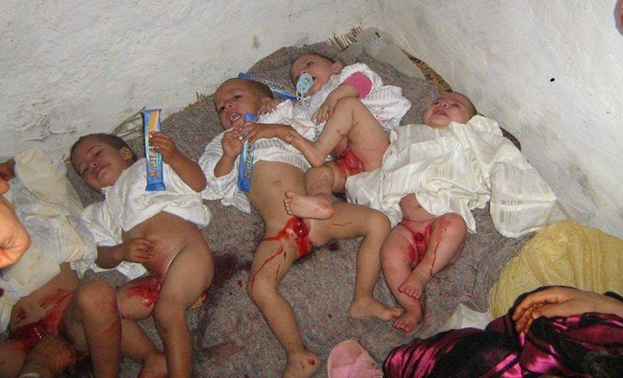
Ms Chapman responded with the image showing five [boy] babies with bloody wounds.

“Oh, we could have this here too? Would you like your fanny sliced off,” she captioned the photo.

“Yes. I’m opposed to female genital mutilation, child brides, inequality, women beating, all part of Quran, read it.”

The graphic tweet that has caused so much reaction
The graphic tweet that has generated so much reaction Source: Twitter  [Elise Chapman has since had her Twitter account suspended.]
 
Ms Chapman was one of two councillors who voted against approving the mosque, which would include two prayer rooms, a shop and community sports centre.

The project has been the subject of vocal protests and a social media campaign from opponents, including 350 who submitted formal objections to the council.

About 40 letters of support were also received.
Victorian Civil and Administrative Tribunal hearings into the development are ongoing.

[Apart from Ms Chapman's Islamophobia, only one problem with this story: the picture shows boy babies who have just been genitally cut ("circumcised"). Here is the original from here (NSFW).
boys after Islamic circumcision
Will learning this change Ms Chapman's view of male genital cutting? Or female? Since the firestorm this generated may have ended her career, does it matter?]

MALAYSIA: Female cutting on the rise

The Express Tribune (Pakistan)
February 20, 2015

Female circumcision on the rise in Malaysia

Syahiera Atika, a 19-year-old Malaysian girl  has happily embraced western-style capitalism but in contrast strictly follows the local interpretation of Islam as she informed the Vice of her circumcision.
 
Female circumcision involves the surgical removal of all or part of a woman’s clitoris. The World Health Organisation (WHO) has classed this procedure as Female Genital Mutilation (FGM).

WHO also defines it as an operation that “involves partial or total removal of the external female genitalia, or other injury to the female genital organs for non-medical reasons.”

Syahiera however, rejects the notion that it is inhumane and says that ”I’m circumcised because it is required by Islam.” She refers to it as ‘wajib’, which means any religious duty commanded by Allah.

“I don’t think the way we do it here is harmful,” she said, adding that “it protects young girls from pre-marital sex as it is supposed to lower their sex drive. But I am not sure it always works.” [Of course it does not affect their drive, only their sensations.]

According to a 2012 study conducted by Dr Maznah Dahlui, over 93 per cent of Muslim women surveyed had been circumcised. This made Syahiera among the majority of Muslim women in Malaysia.

Dr Dahlui also noted that the procedure was increasingly performed by trained medical professionals in private clinics, instead of by traditional circumcision practitioners.

Shocking to Western sensibilities, Dr Maznah insisted that Malaysia’s version of the procedure in less invasive than in other parts of the world.

Obstetrician and gynaecologist, Dr Mighilia of the Global Ikhwan private clinic located in Rawang, north of Kuala Lumpur, admitted that she performs a more drastic version with a needle or scissors. “I just take a needle and slit off the top of the clitoris, but it is very little,” she said. “Just one millimetre.”

WHO has declared FGM to provide no medical benefits whatsoever. It simply reflects the deep-rooted inequality between the sexes. For this reason, the United Nations General Assembly in 2012 unanimously passed a resolution calling it a “human rights violation” and urged states to ban the practice.

Some Malaysian medical practitioners also defend the practice by passing judgment onto other countries. “We are very much against what is going on in other countries like Sudan,”says Dr Ariza Mohamed, a Consultant Obstetrician and Gynecologist at KPJ Ampang Puteri Specialist Hospital in Kuala Lumpur.

“That is very different from what we practice in Malaysia,” she said adding “and there is a big difference between circumcision and female genital mutilation.”

All Malaysians however, do not support the practice. Syarifatul Adibah, who is the Senior Programme Officer at Sisters in Islam, a local women’s rights group, insists that female circumcision isn’t once mentioned in the Quran.

Instead she points to its popularity as a stemming from an increasingly conservative interpretation of Islam. “Previously it was a cultural practice but now because of Islamisation, people just relate everything to Islam. And when you link something to religion, people here follow it blindly, they don’t enquire,” she explained.

The practice is not banned in Malaysia, although public hospitals are prevented from performing the surgery. More concerning however is that in 2009 the Fatwa Committee of Malaysia’s National Council of Islamic Religious Affairs ruled that female circumcision was obligatory for all Muslim women, unless it was harmful.

Saturday, February 7, 2015

LONDON: Doctor charged with cutting woman after childbirth

BBC
January  19, 205

Doctor 'performed FGM on new mother in hospital'

A British doctor performed female genital mutilation on a young mother after she gave birth in hospital, a court has heard.

Dhanuson Dharmasena, 32, is accused of carrying out the illegal procedure at the Whittington Hospital in north London.

The doctor, of Ilford, London, denies the charge in what is the first prosecution of its kind in the UK.
A second man, Hasan Mohamed, 41, denies encouraging and abetting the offence.
...
Carrying out female genital mutilation carries a maximum sentence of 14 years in prison.

'Encouragement' The mother-of-two, who cannot be identified, first underwent FGM aged six in Somalia, London's Southwark Crown Court heard.

She was 24 and living in Britain when she give birth to her first child in November 2012.

The court heard that during labour, her FGM stitches were torn and Dr Dharmasena, a junior registrar in obstetrics and gynaecology, sewed her back up in a procedure that amounted to FGM.

The prosecution alleges the doctor did so at Mr Mohamed's "insistence or encouragement".

Kate Bex, prosecuting, told jurors that FGM was "very dangerous for a woman's health and psychological well-being"....

"It increases the risk of death in childbirth to both mother and baby."

Jurors heard the woman would have been most exposed to these side-effects when the surgery was first performed when she was six.

Dr Dharmasena's stitches would not have carried the same risks, but should not have been sewn at all "unless medically necessary", Ms Bex said.

'Changed tack' The hospital trust launched an investigation into the incident within a few weeks.

In a statement, Dr Dharmasena said he had carried out the procedure because he thought the woman wanted him to. He also said Mr Mohamed had urged him to do so.

He said: "At no point in time did I intentionally or deliberately want to cause any harm to the patient. I had obeyed all of the patient's wishes."

But jurors were told he had changed his justification when he was interviewed by police in August 2013.

Ms Bex said: "It would seem that Dr Dharmasena had familiarised himself with the law and you may feel that he changed tack as a result."

Ten months after the operation, he raised the possibility that it had been "medically justified", she told the court.

Dr Dharmasena denies one count of female genital mutilation.

Mr Mohamed denies one count of aiding or abetting the procedure, and one count of intentionally encouraging or assisting the commission of an offence.

The trial continues.

TANZANIA: Girls cut after leaving refuge - one father arrested


Tanzania Daily News
January  19,2015

Tanzania: Police Confirm Single Arrest Over Forced FGM in Tarime

Tarime — POLICE have arrested a man here for allegedly forcing her daughter to undergo female genital mutilation (FGM) at a village in Tarime, Mara Region .

The single arrest came in the wake of shocing reports that dozens of girls who escaped the cut and camped at Termination of Female Genital Mutilation(TFGM) Masanga Centre in the critical months of November and December when FGM was widely conducted in area, are now being subjected to forced circumcision.

More than 600 most school girls refused the cut and sought shelter at the rescue centre, which operates under the Roman Catholic Church of Musoma Diocese with the support of several partners, including United Nations Population Fund(UNFPA) and Children's Dignity Forum(CDF), a nongovernmental organisation, which has of late enhanced the battle against FGM in the area.

... The girls left the centre early this month in a colourful function officiated by Minister for Labour and Employment, Ms Gaudensia Kabaka.

Tanzania Media Women's Association (TAMWA) Executive Director Ms Valerie Msoka described the report about the girl who was forcibly cut in Tarime as "shocking and humiliation of the highest order".

She called for immediate new effective measures that will help to save girls from the outdated harmful culture. FGM is illegal according to the law. "
...

LEEDS, UK: "Male cutting worse than some female cutting" - Judge

InsideMAN
January 15, 2015

Male circumcision can be worse than FGM rules senior judge

One of the country’s most senior judges has courted controversy by declaring that male circumcision can be more harmful than female genital mutilation (FGM).

Sir James Munby acknowledged he was entering “deep waters” by highlighting inconsistencies in the law, but said it would be “irrational” to dispute the fact that male circumcision can be more harmful than some forms of FGM. The High Court judge made the comments as he passed judgment in care proceedings brought by a local authority seeking to take a brother and sister, from a Muslim family, into care on the grounds that the girl was a victim of Type IV FGM.

While the case failed on the grounds that damage to the girl’s genitals was probably caused by a condition called vulvovaginitis, Munby, who is president of the family division, felt compelled to highlight the sexist double standard that the case brought to light.

In summing up the judge noted that while subjecting a girl to Type IV FGM could result in that child being taken into care, male circumcision would not lead to a boy being removed from his family, even though the procedure is more harmful than at least some forms of Type IV FGM.

An inconvenient truth 
Campaigners against male circumcision have long been hampered by the myth that subjecting girls to FGM is different and always worse than circumcising boys.

The uncomfortable truth, to which Munby has now given judicial credibility, is that male circumcision is different and sometimes worse than FGM.

This is particularly true of Type IV FGM which incorporates practices such as pricking, piercing and nicking the genitals, which are less harmful and invasive than removing the foreskin in it’s entirety.
Male circumcision in the UK is often performed without anaesthetic, in non-medical conditions and can cause complications such as life threatening haemorrhage, shock, sepsis an in extreme cases death.

In 2012 a Freedom of Information request revealed that two boys a week are admitted to the emergency department of Birmingham children’s hospital as a result of male circumcision.

Society more tolerant of male circumcision 
However, despite Munby’s assessment that ”on any objective view” male circumcisions is sometimes worse than FGM, he also made clear that current judicial thinking is that there is no equivalence between the two practices.

“In 2015 ,” he said in his judgment, “the law generally, and family law in particular, is still prepared to tolerate non-therapeutic male circumcision performed for religious or even for purely cultural or conventional reasons, while no longer being willing to tolerate FGM in any of its forms.

“Given the comparison between what is involved in male circumcision and FGM WHO Type IV, to dispute that the more invasive procedure involves the significant harm involved in the less invasive procedure would seem almost irrational. In my judgment, if FGM Type IV amounts to significant harm, as in my judgment it does, then the same must be so of male circumcision.”

The phrase “significant harm” is important as this is the first threshold that must be crossed before a child can be taken into care under section 31 of the Children’s Act 1989. There is another criteria which must also be considered in care proceedings and this is whether the care given to a child is “what would be reasonable to expect a parent to give”.

Why the law is different 
According to Munby, while it can never be reasonable parenting to inflict any form of FGM on a child, the position is quite different with male circumcision.

Munby argued that there are at least two important distinctions between the two practices. Firstly, that FGM has no basis in any religion, while male circumcision is often performed for religious reasons. Secondly, that while FGM is said to have no medical justification and confers no health benefits; male circumcision is seen by some people as providing hygienic or prophylactic benefits, although opinions are divided.

Even taking the conflicting medical evidence on any perceived benefits into account, Munby concluded that “reasonable” parenting should be seen to permit male circumcision.

And that is where UK law stands on the matter today. The Head of the Family Division of the Family Court has judged that while male circumcision is sometimes worse than FGM, it is deemed to be reasonable for parents of all backgrounds to circumcise their sons, while carrying out a less invasive and less harmful from of Type IV FGM on their daughters is not considered reasonable parental behaviour.
...

Monday, December 29, 2014

KENYA: Police search for 17 girl-cutters

The Counties (Kenya)
December 16, 2014

Police search for 17 FGM initiators

by Fred Kibor
Seventeen suspected Female Genital Mutilation (FGM) initiators have fled for fear of being arrested after they circumcised 31 girls over the weekend.

Deputy County Commissioner Hussein Alaso said they had received the names of the suspects from Tinyar and Kaptabukwo villages in Chugor sub-location.

"The county security team is looking for the suspects and will arrest them when found," he said.
Efforts by law enforcers to rescue the girls and arrest the perpetrators were thwarted on Saturday after local residents attacked police officers with stones while hurling curses at them.

"At the moment, there is little goodwill at the local level to end this outdated practice. However, once these suspects are arrested and charged, then residents will know that the Government is determined to put an end to this dehumanising act," Mr Alaso told The Standard.

The initiates are currently in seclusion in an unknown place after their previous hideout was exposed. Health personnel have urged locals to take them to hospital, saying the girls risked infection from exposure to unhygienic conditions. Health Executive Stephen Biwott said they had deployed health workers to be on standby in the area once the locals brought the initiates for medical attention.

Local MPs said while the incident was a setback in the fight against FGM, they would not relent.

TANZANIA: 120 girls flee cutting

Tanzania Daily News
December 15, 2014

Tanzania: More Than 100 Girls Flee From 'Knife' in Mara

by Mugini Jacob
Mugumu — NEARLY 120 girls have camped at a new safe house in Mugumu Town in Serengeti District after fleeing forced circumcision from different Mara Region villages.

"The number was 117 by Saturday and most of the girls have been badly beaten and injured for refusing to be circumcised", the Coordinator of the Serengeti We Can Live Without HIV/AIDS, Gender Based Violence (GBV) and Female Genital Mutilation (FGM) project, which is run by the Mara Diocese of the Anglican Church of Tanzania, Ms Rhobi Samweli, said.

The girls started fleeing their homes early this month when the on-going female genital mutilation (FGM) season kicked off in various parts of Mara Region.

"The girls we have here are coming from villages in Tarime, Serengeti and Butiama districts. We are feeding them but some come without even clothes, so we had to buy them clothes", Ms Rhobi said.
Those who were received with injuries were also taken to Mugumu District Designated Hospital for treatment, according to the official.

According to Ms Rhobi , the Police Force, through its gender desk, is showing good cooperation in protecting the girls. Establishment of the new safe house in Mugumu is designed to address the problem of FGM and other forms of GBV acts in Serengeti District.

It is part of the outcome of an ambitious anti-GBV, FGM and HIV/ AIDS implemented in the district under the sponsorship of Rapid Fund Envelope (RFE) in recent years.
...